PR – A delegation from Grenada, comprising representatives of the Ministry of the Blue Economy and Marine Affairs, the Grenada National Sargassum Taskforce, the Grenada Solid Waste Management Authority, and the International Trade Center (ITC) participated in a technical study tour and training in Punta Cana under GIZ´s Material and Energetic Utilization of Organic Waste and Sargassum Project (BioWaste Caribbean).
From 24 to 28 August 2026, the delegation engaged with private-sector stakeholders in the tourism, waste management and sargassum sectors, including the Grupo Puntacana Foundation, DESMI and Bois d’Arc. The exchanges focused on sargassum containment and collection systems currently deployed in the Punta Cana region of the Dominican Republic, as well as sargassum utilization.
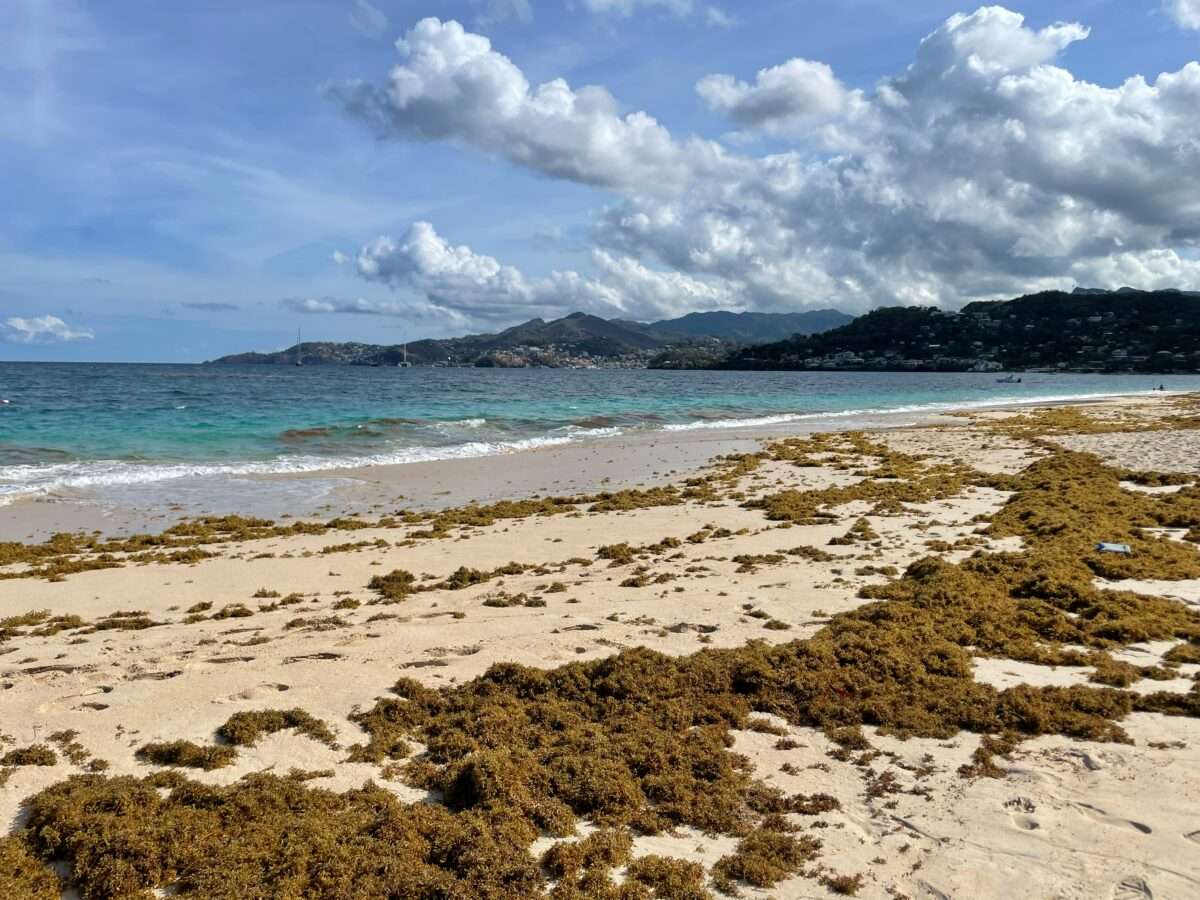
Through technical training and site visits, participants gained first-hand insight into the design, deployment and operation of offshore barriers, collection and pumping systems used to protect beaches, coastal ecosystems and tourism operations from large influxes of sargassum and bring fresher, cleaner sargassum onshore. The programme included close-up inspections of deployed barrier systems, a visit to DESMI’s operations at La Yola Marina and a tour of its assembly facility in Bávaro.
Hosted by the Grupo Puntacana Foundation, the delegation also visited the GIZ-supported Bio-S Laboratory to learn about the Foundation’s expanding research and testing capacity on sargassum and biowaste utilization. Jake Kheel, Vice President of the Grupo Puntacana Foundation, said:
“Over the past 15 years, our approach to sargassum management has been very practical and field-based — testing solutions at a small scale and building on what works. We have focused on floating barriers to prevent sargassum from reaching the coast, tested different collection systems, and worked in parallel to support valorisation. An important part of that has been giving entrepreneurs and companies access to collected sargassum so they can test new products and applications and help develop a viable sargassum valorisation industry.”
Isaac Bhagwan, Permanent Secretary in the Ministry of the Blue Economy and Marine Affairs, stated:
“This study tour has been an eye-opening experience for the Grenada delegation. By seeing first-hand how sargassum is forecast, contained, collected and put to productive use—and by learning from more than a decade of successes and challenges in Punta Cana—we are better placed to assess which pproaches could work in Grenada. The practical insights gained here will help us avoid costly mistakes and provide sound, evidence-based advice to guide the Government’s decisions.”
The BioWaste Caribbean project is supporting Grenadian stakeholders in the development of an appropriate sargassum containment and collection system, as well its productive use, while facilitating knowledge exchange with experienced operators and technology providers across the Caribbean.
“Organic waste and sargassum management represent a shared regional challenge for the Caribbean, while also offering significant opportunities for innovation, collaboration and sustainable development. We are pleased to support this regional exchange with our partners from Grenada, which should lead to a concrete demonstration project in Grenada. The BioWaste Caribbean project, funded by the German Government, is implemented in Grenada, St. Lucia, Jamaica, St. Vincent and the Grenadines, and Dominica, while the Dominican Republic and Barbados participate as peer-learning partners, bringing additional experiences and perspectives.”